“In the fast-paced world of digital advertising, Google Ads click fraud prevention has become a critical priority for businesses in 2025. With advertisers investing billions in online campaigns, fraudulent clicks from bots, competitors, or malicious actors can drain budgets and skew performance data. Leveraging geo-targeting strategies alongside advanced fraud prevention tools can help you safeguard your campaigns, maximize ROI, and stay ahead of evolving threats. This blog dives deep into the latest strategies, tools, and best practices to protect your campaigns.
Summary
In 2025, Google Ads click fraud prevention has become essential for advertisers aiming to protect budgets, improve campaign accuracy, and maximize ROI. Click fraud caused by bots, competitors, and click farms can waste ad spend and distort performance data. Businesses can combat this through built-in Google Ads filters, advanced third-party tools like ClickCease and PPC Protect, IP exclusions, geo-targeting, ad scheduling, and regular audits. Implementing honeypot traps can also help detect fraudulent clicks by luring bots into a non-relevant interaction. Recognizing signs like high CTR with low conversions or repeated clicks from the same IP helps detect fraud early. By combining proactive monitoring, AI-based detection, and targeted strategies, advertisers can ensure their ads reach genuine audiences and remain competitive in the evolving digital advertising landscape https://trycybrex.com/click-fraud-prevention/
What is Click Fraud in Google Ads?
Click fraud occurs when someone clicks on your ads with no genuine interest in your product or service, often with malicious intent. These clicks can come from: bots, competitors, or click farms. By implementing proper conversion tracking, you can better identify the effectiveness of your ads, track real customer interactions, and minimize the impact of fraudulent clicks.
- Automated bots
- Competitors trying to exhaust your budget
- Click farms generating fake engagement
Click fraud prevention ensures your ad spend reaches real, high-intent users.
Why Click Fraud Prevention is Critical in 2025
- Budget Protection – Every invalid click wastes part of your daily ad spend.
- Improved Campaign Accuracy – Fraud skews analytics, making optimization harder.
- Higher ROI – Eliminating fake clicks focuses resources on genuine prospects.
- Account Safety – Avoids Google Ads penalties due to unusual click patterns.
Major Types of Click Fraud
Understanding the common types is the first step toward prevention:
- Bot Clicks – Automated programs mimicking real users.
- Competitor Clicks – Rival businesses repeatedly clicking ads.
- Click Farms – Groups of people paid to click ads at scale.
- Ad Stacking – Multiple ads layered in one placement, charging multiple advertisers for one click.

Top Click Fraud Prevention Strategies for Google Ads in 2025
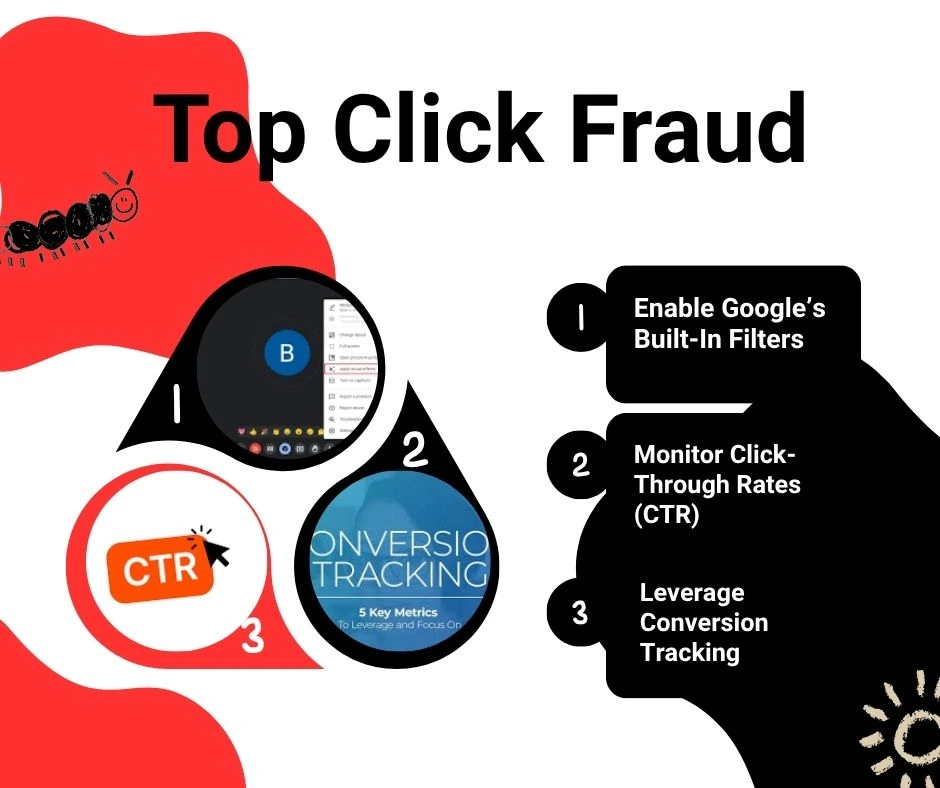
1. Enable Google’s Built-In Filters
Google Ads has in-built click fraud prevention that automatically filters invalid clicks. While effective, it’s not foolproof, so external tools may still be needed.
2. Use Third-Party Click Fraud Prevention Tools
Specialized tools go beyond Google’s default filters. Popular options include:
- ClickCease – Real-time IP blocking & fraud detection.
- PPC Protect – AI-based behavioral analysis.
- TrafficGuard – Advanced monitoring & fraud analytics.
3. Implement IP Exclusions
Regularly analyze click logs to identify suspicious IP addresses and add them to Google Ads’ IP exclusion list.
4. Monitor Click-Through Rates (CTR)
Sudden spikes in CTR without conversions often indicate click fraud. To prevent click fraud, set up alerts for unusual changes in performance metrics. Monitoring these metrics helps detect fraudulent activity early and protects your ad spend.
5. Geo-Targeting Adjustments
Restrict your ad targeting to regions where your genuine customers are located. Avoid countries or regions known for high fraudulent activity. SaaS solutions can also help streamline your targeting process, offering advanced features for geo-targeting and fraud detection.
6. Use Ad Scheduling
Run ads during specific business hours to reduce exposure to fraudulent clicks from bots or competitors operating in off-hours. PaaS solutions can help automate ad scheduling, ensuring your ads are only shown during optimal times for genuine engagement.
7. Leverage Conversion Tracking
Track not only clicks but also post-click actions (sign-ups, purchases) to identify and block low-quality traffic sources.
8. Employ Negative Keywords
Prevent your ads from appearing for irrelevant searches that attract low-quality traffic.
9. Regular Campaign Audits
Monthly audits of campaign data help identify patterns that could indicate fraud.
10. Collaborate with Google Support
If you notice unusual activity, report it to Google Ads support. They can investigate and issue refunds for verified invalid clicks. Additionally, IaaS solutions can help streamline the reporting process, making it easier to track and manage your ad performance data.
Signs You’re a Victim of Click Fraud
- High CTR but low conversions
- Ads receiving clicks from unusual geographic locations
- Repeated clicks from the same IP
- Budget depletion early in the day
Proactive Measures for 202
- Adopt AI-Based Monitoring – Detects fraud in real-time.
- Educate Your Marketing Team – Awareness is key.
- Regular IP & Placement Reviews – Stay on top of suspicious sources.
Conclusion
Click fraud remains one of the biggest threats to Google Ads advertisers, but with the right click fraud prevention strategies in 2025, you can safeguard your campaigns, optimize spending, and maximize your returns. Combining Google’s built-in protection with advanced tools, strict monitoring, and smart targeting ensures that your ads are seen by genuine potential customers, not bots or competitors. Kubernetes-based solutions can help manage and scale these tools efficiently. Stay proactive, monitor your metrics closely, and make click fraud prevention a core part of your PPC strategy.